

Are Plastic Pallets Better Than Wooden Pallets? A Guide for UK and European Buyers
Plastic pallets are widely used for storing, handling and transporting goods across modern supply chains. For businesses looking to manage operating costs, simplify maintenance and improve handling efficiency, they can offer a practical alternative to traditional wooden pallets.
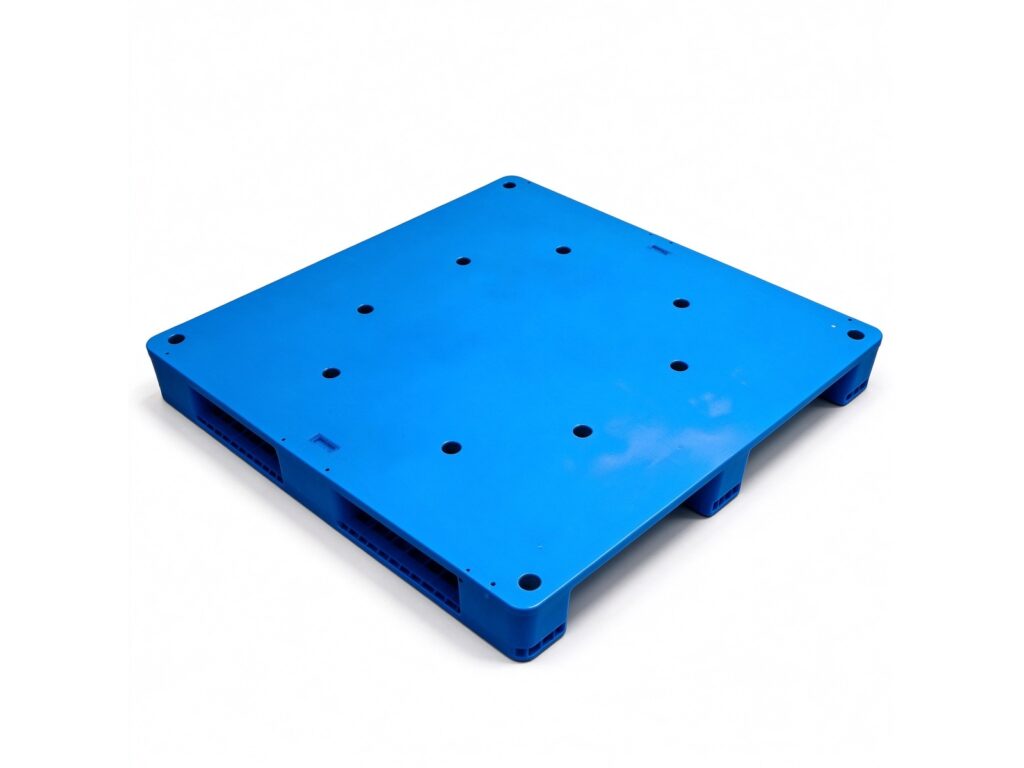
When specifying pallets for a warehouse, production line or export supply chain, the unit price is only one part of the decision. The pallet must support the intended load, fit the handling equipment, suit the operating environment and deliver an acceptable cost over its service life. For UK and European buyers, comparing plastic pallets with wooden pallets also means checking dimensions, load ratings, hygiene requirements and any rules that apply to the route or industry.
Plastic pallets can be a strong option for repeated handling, damp environments, hygiene-sensitive workflows and automated systems. Wooden pallets may remain more economical where the initial purchase price matters most, on one-way consignments, or where repair and recovery networks are already established. Neither material is automatically best for every application; the decision should be based on the actual load, handling conditions and return route.
Plastic Pallets vs Wooden Pallets: At a Glance
| Factor | Plastic pallets | Wooden pallets |
|---|---|---|
|
Purchase price |
Often higher initially; assess cost over the expected service life. |
Often lower upfront and widely available. |
|
Repeated use |
Moulded construction can support consistent handling over many trips when correctly specified. |
Can be reused, but boards, blocks or fasteners may loosen or break. |
|
Moisture |
Does not absorb water like timber and will not rot in the same way. |
Can absorb moisture and may swell, warp or develop mould in unsuitable conditions. |
|
Cleanliness |
Suitable designs are generally easier to wash and inspect. |
Gaps, rough surfaces and porous timber can make cleaning more difficult. |
|
Dimensions |
Moulded dimensions can be more consistent for conveyors and automation. |
Dimensions and condition can vary with manufacture, repairs and wear. |
|
Repair |
Damaged units are generally replaced rather than repaired on site. |
Some damage can be repaired by replacing boards or fasteners. |
|
End of life |
Many HDPE and PP pallets can enter suitable recycling streams; local acceptance matters. |
May be reused, repaired, chipped or recovered as timber where suitable facilities exist. |
The table summarises typical differences rather than guaranteeing the performance of every pallet. Resin grade, design, construction, load distribution, support conditions, operating temperature and maintenance all affect performance.
Key Advantages of Plastic Pallets
1. Built for repeated handling
A well-designed plastic pallet can withstand repeated movement through loading bays, warehouses and distribution centres without the splinters, loose nails or broken boards associated with damaged timber pallets. It is not indestructible: impact, overloading, unsuitable fork entry and poor handling can still cause damage. In high-turnover operations, a correctly specified reusable pallet may reduce replacement frequency and handling interruptions.
2. More consistent dimensions for automation
Plastic pallets are moulded, which can provide consistent dimensions and geometry from one unit to the next. This matters on conveyors, in automated storage and retrieval systems (AS/RS), and wherever pallet position affects sensors or equipment clearances. Before ordering, confirm the exact footprint, entry direction, bottom-deck design, dimensional tolerances and equipment compatibility with the system integrator.
3. Easier to clean for hygiene-sensitive workflows
Plastic surfaces do not absorb moisture in the same way as timber, and a suitable design can be easier to wash and inspect. This may be useful in food and drink, pharmaceutical supply chains and other operations with documented cleaning procedures. A plastic pallet is not automatically food-contact compliant, sterile or suitable for a regulated environment. Check the resin grade, additives, traceability, cleaning instructions and any declarations or test evidence required for the intended application.
4. No splinters or protruding nails from timber
Because they have no timber boards or nails, plastic pallets avoid two common sources of product damage and handling injuries: splinters and loose fasteners. This can be useful when cartons, sacks or wrapped goods are handled frequently. Edge design, surface grip, pallet condition and safe operating procedures still need to be assessed on site.
5. Better suited to damp areas and many cold-chain settings
Plastic does not absorb moisture like timber, so it will not rot or swell through water absorption in the same way. This can make plastic pallets suitable for wash-down areas, chilled storage and many cold-chain applications. However, not every polymer formulation performs equally at low temperatures or in prolonged sunlight. Confirm the operating-temperature range, impact performance and UV resistance of the specific model.
6. More predictable costs over a reuse cycle
The lowest unit price does not necessarily deliver the lowest whole-life cost. Compare purchase price, expected journeys, damage rates, cleaning, repair or replacement, product damage, labour, storage, return transport and end-of-life costs. Heavy-duty plastic pallets may justify a higher initial investment where pallets circulate repeatedly and losses or downtime are costly. For a one-way shipment with no recovery route, a lower-cost wooden pallet may be the more economical choice.
7. A practical option for returnable and recyclable packaging programmes
Many pallets made from recyclable polymers such as high-density polyethylene (HDPE) or polypropylene (PP) can be reprocessed at the end of their service life. Reuse and recycling may reduce demand for virgin material, but the outcome depends on pallet design, polymer identification, contamination, collection rates and the facilities available in the destination market. A recyclable plastic pallet is most useful when a realistic return, reuse or recycling route is in place.
When Might a Wooden Pallet Be the Better Choice?
Plastic is not the right choice for every operation. Wooden pallets are often available at a lower initial cost and can be repaired using familiar tools and materials. They may suit one-way consignments, open-loop distribution or businesses with an established timber-pallet repair and recovery system. In some markets, used timber also has a well-developed local reuse route.
A fair comparison should cover the entire supply chain, not just the material. If pallets will return to the same site for many trips, a reusable plastic model may offer better long-term value. If a pallet is unlikely to return after delivery, the purchase price and requirements at the destination may carry more weight.
How to Choose the Right Plastic Pallet
- Define the load case. Distinguish static load (stationary storage), dynamic load (during movement by a forklift truck or pallet truck) and racking load (when supported on rack beams). These ratings are not interchangeable.
- Confirm the support conditions. Rack-beam spacing, load distribution, pallet orientation and the bottom-deck design can change the usable capacity.
- Check compatibility with handling equipment. Confirm dimensions, fork-entry points, deck design, edge details and tolerances with the conveyor, forklift truck or automation supplier.
- Match the material to the operating environment. Confirm temperature limits, UV exposure, chemicals, cleaning agents, moisture and likely impact conditions.
- Specify hygiene requirements. For food, pharmaceutical or other controlled environments, request relevant material declarations, cleaning guidance and compliance documentation rather than relying on a general “hygienic” claim.
- Plan for end of life. Ask whether the pallet uses an identified recyclable polymer and whether take-back or recycling facilities are available in the country where it will be used.
- Compare whole-life cost. Estimate the expected number of trips and include damage, replacement, cleaning, labour, transport and end-of-life costs.
European Pallet Dimensions and Technical Standards
There is no single footprint that suits every European supply chain. The 1,200 × 800 mm and 1,200 × 1,000 mm formats are both widely used, but the correct size depends on the warehouse, sector, racking, handling equipment and pallet-pooling arrangement. Matching the footprint alone does not make a plastic pallet interchangeable with a licensed EPAL pallet or a proprietary pool pallet.
Load ratings: use documented test conditions
When evaluating a pallet, ask how its load capacity was determined and whether the published rating matches the way the pallet will be used. ISO 8611-1:2025 sets out test methods for new flat pallets; ISO 8611-2:2025 covers performance requirements and selection of tests; and ISO 8611-3:2011 addresses the determination of maximum working loads. ISO 6780:2003 specifies principal dimensions and tolerances for flat pallets made from any material. These references help buyers frame a technical specification, but a reference to a standard alone is not proof that a particular model has passed the relevant tests.
Ask the supplier for the model-specific technical datasheet and, where relevant, test reports. The documents should make clear the load case, support arrangement, load distribution, pallet orientation and any temperature or handling limits. For racking applications, confirm the pallet and rack combination with the racking or system supplier before use.
Export requirements for wooden pallets
For international movements, wooden packaging may be subject to ISPM 15 phytosanitary requirements depending on the origin, destination and route. Buyers should check the current rules for the shipment rather than assume that every wooden pallet is treated in the same way. A pallet made entirely from plastic is not wood packaging material covered by ISPM 15; composite designs containing solid wood components need to be assessed separately.
Hygiene and regulated applications
For food, pharmaceutical or other controlled environments, ask for the material declaration, traceability information, cleaning guidance and any application-specific compliance evidence required by the site. HDPE construction alone does not establish food-contact suitability, sterility or compliance with every regulatory requirement.
ISO 8611-1:2025 | ISO 8611-2:2025 | ISO 8611-3:2011 | ISO 6780:2003 | UK wood packaging guidance
Why Consider Qingdao Chenhuitong Plastic Industry Co., Ltd.?
For buyers sourcing reusable plastic pallets for warehousing, industrial handling or export logistics, Qingdao Chenhuitong Plastic Industry Co., Ltd. offers options for general handling and more demanding applications. The company profile provided for this article identifies Henan Sitong Group Co., Ltd. as the parent group and Henan Chenhui Plastic Co., Ltd. as a wholly owned subsidiary; these corporate details should be checked against the company’s current official profile before publication.
1. Impact-resistant HDPE material
The company’s product information identifies high-density polyethylene (HDPE) as the material used for its plastic pallets. HDPE can offer useful impact resistance when the resin grade, pallet design and operating conditions are correctly matched. Buyers should request model-specific material details and confirm suitability for their operating temperatures and handling conditions.
2. Heavy-duty models with defined load ratings
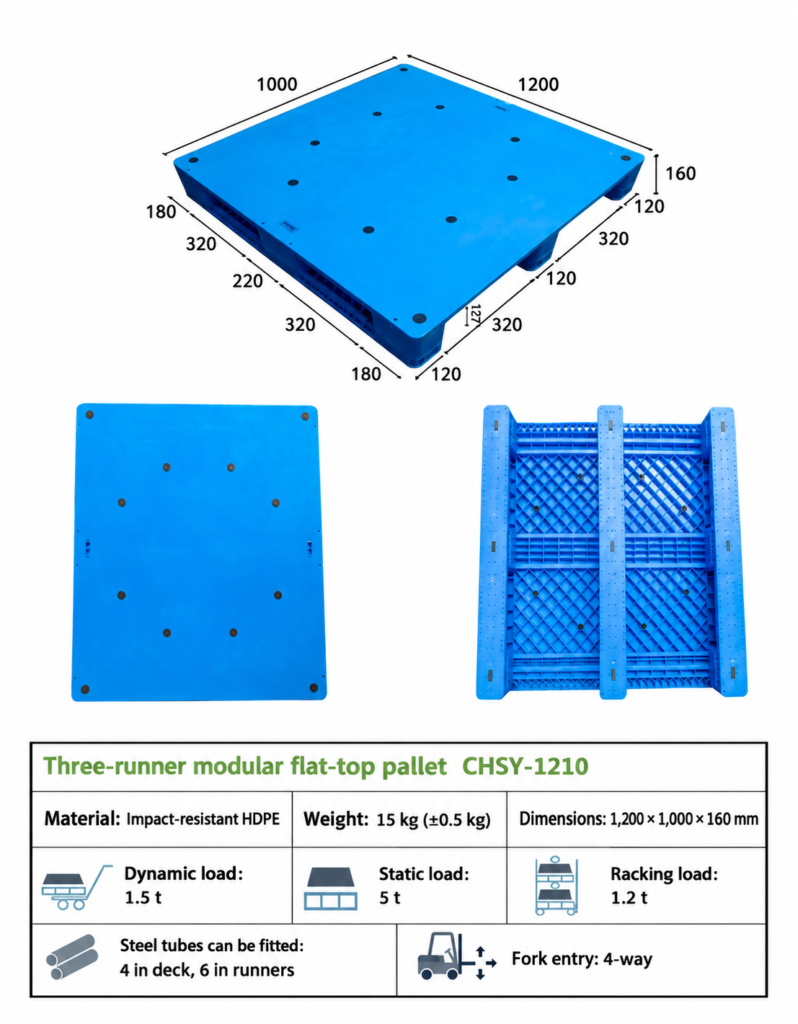
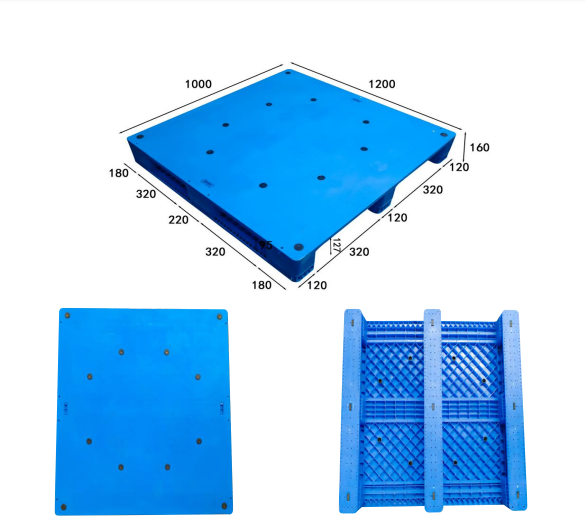
The product information provided for this draft lists Three-Runner Solid Deck Plastic Pallet-CHSY-1210 of up to 5,000 kg static, 1,500 kg dynamic and 1,200 kg on racking for certain heavy-duty plastic pallet models. These figures must be verified against the current datasheet for the exact model, including test method, support conditions and load distribution. They must not be applied to every pallet in the range or treated as interchangeable ratings.
3. Recyclable plastic pallet options
The company states that its plastic pallet products can be reused and recycled through suitable recovery channels. Buyers with sustainability targets should confirm the polymer identification, local recycling acceptance and whether a take-back or recovery arrangement is available in their market.
4. Options for different sectors and load requirements
The company profile describes applications in warehousing and logistics, e-commerce, food and drink, pharmaceuticals and cold-chain operations, with options ranging from lighter-duty designs to heavy-duty plastic pallets. For regulated or hygiene-sensitive uses, buyers should confirm suitability against their site requirements and request any applicable material declarations or test documentation.
5. Product selection support for real operating conditions
The right pallet is the one that suits the load, equipment and supply-chain route. When contacting Qingdao Chenhuitong, provide the required footprint, gross load, load distribution, handling method, racking arrangement, operating temperature and expected number of reuse cycles. This information helps the supplier identify a suitable model and provide the relevant technical datasheet.
Looking for heavy-duty plastic pallets or recyclable plastic pallets for a UK or European operation? Contact Qingdao Chenhuitong Plastic Industry Co., Ltd. to discuss your handling requirements and request current, model-specific specifications before placing an order.
Explore More Success Stories
Are Plastic Pallets Better Than
Blog Are Plastic Pallets Better Than Wooden Pallets? A Guide for UK and European Buyers Plastic pallets are widely used.....
Read Case Study →
Plastic Pallets: A Cost-Effective Choice
Blog Plastic Pallets: A Cost-Effective Choice for More Efficient Logistics Plastic pallets are widely used for storing, handling and transporting.....
Read Case Study →Frequently Asked Questions About Plastic Pallets
Are plastic pallets stronger than wooden pallets?
Some heavy-duty plastic pallets are designed for demanding loads and repeated use, but performance depends on the exact model, support conditions and load distribution. Compare documented static, dynamic and racking ratings for the intended application rather than comparing materials in general.
Are recyclable plastic pallets a more sustainable option?
They can support reuse and material recovery, particularly in a managed returnable system. The environmental outcome depends on service life, transport, collection rates and the availability of a suitable recycling route. The term “recyclable” does not, by itself, mean that a pallet will actually be recycled.
Are plastic pallets suitable for food and pharmaceutical logistics?
They can be suitable where the pallet design, material and cleaning process meet the operation’s requirements. Buyers should confirm product-specific declarations and the regulatory or customer requirements that apply to the facility and supply chain.
What is the difference between static, dynamic and racking load capacity?
Static load capacity applies when a pallet is stationary under defined support conditions. Dynamic load capacity applies during handling, while racking load capacity applies when the pallet is supported by rack beams. These figures are meaningful only when the test conditions and load arrangement are understood. Follow the manufacturer’s instructions.
Which pallet standards should European buyers check?
For dimensions, ISO 6780:2003 may be relevant; for load and performance testing, consult the applicable parts of the ISO 8611 series. Ask the supplier which edition and tests were used and request evidence for the exact model and application. Also check any customer, sector, site or pallet-pool requirements that apply.
How do I choose a plastic pallet supplier?
Request a model-specific technical datasheet, load ratings and test conditions, material details, dimensions, environmental limits, quality documentation and guidance for the intended handling system. Where practicable, evaluate a sample under representative operating conditions before committing to a large order.
Ready to optimize your material
handling?
Tell us about your requirements and our engineering team will deliver a custom quote
with product recommendations within 24 hours.